Must-Try Thai Dishes: The Ultimate Guide to Thai Cuisine
Why Thai Food Is One of the World's Most Beloved Cuisines
Ask anyone who has visited Thailand about the food, and you will almost always get the same answer: it is unforgettable. Bold flavors, fresh herbs, vibrant colors, and a balance of sweet, sour, salty, spicy, and umami all packed into a single bowl. Thai cuisine is not just food - it is a daily celebration of life.
In 2026, that global recognition reached a new milestone. TasteAtlas published its Top 100 Thai Dishes, placing Phanaeng Curry, Tom Kha Gai, and Roti among the top 10. At the same time, the Michelin Guide Thailand 2026 added 10 new starred restaurants to its list, including a third restaurant to receive three stars - a historic achievement for Thai gastronomy on the world stage.
Whether you are planning a two-week holiday or a long-term move to Thailand, knowing what to eat (and where to find it) will completely transform your experience. This guide walks you through the essential dishes you simply cannot miss.
The Holy Trinity: Dishes Every Visitor Knows
Pad Thai - The National Icon
Let's start with the obvious one. Pad Thai is probably the dish most associated with Thailand around the world, and for good reason. Stir-fried rice noodles, eggs, tofu or shrimp, bean sprouts, and crushed peanuts, all finished with a squeeze of lime and a pinch of dried chili - it is simple, fast, and deeply satisfying.
You will find Pad Thai everywhere: from street carts in Bangkok to upscale restaurants in Chiang Mai. On the street, expect to pay between 50 and 80 THB (roughly 1.30 to 2 USD). In a sit-down restaurant, prices range from 100 to 200 THB. The street version is often better, by the way.
Tom Yum Goong - The Soup That Wakes You Up
Tom Yum Goong is a hot and sour soup made with shrimp, lemongrass, kaffir lime leaves, galangal, mushrooms, and bird's eye chili. It hits hard: aromatic, tangy, and spicy all at once. There is also a creamy version called Tom Yum Nam Khon, which adds coconut milk for a richer, milder experience.
This dish is a staple of Thai family tables and appears on virtually every restaurant menu in the country. A bowl in a local restaurant costs around 80 to 150 THB. At a high-end Bangkok spot, you might pay 300 THB or more, but the core experience remains the same.
Green Curry (Gaeng Keow Wan)
Thai curries deserve a category of their own. Green curry is one of the spiciest in the family, made with green chili paste, coconut milk, Thai eggplant, and your choice of protein (chicken, beef, or tofu). Served over jasmine rice, it is fragrant, rich, and genuinely warming.
Green curry is a staple you can find at any Thai restaurant, both in Thailand and abroad. But tasting it fresh in Bangkok - where the paste is made daily and the coconut milk is pressed the same morning - is a completely different experience.
The Rising Stars: Dishes That Deserve More Attention
Phanaeng Curry - TasteAtlas Top 10 in 2026
If green curry is bold, Phanaeng Curry is sophisticated. Thicker, creamier, and slightly sweeter than its green cousin, Phanaeng uses a dry curry paste enriched with roasted peanuts and a generous amount of coconut cream. It is typically made with beef or chicken and garnished with kaffir lime leaves sliced into fine ribbons.
TasteAtlas ranked Phanaeng Curry among the top 10 Thai dishes in 2026, recognizing its depth and complexity. If you have only ever tried green or red curry, Phanaeng will genuinely surprise you.
Tom Kha Gai - Coconut Soup with Soul
Tom Kha Gai translates roughly to "chicken galangal soup," and while that sounds modest, the result is anything but. The base is a silky coconut milk broth infused with galangal, lemongrass, and kaffir lime leaves, with pieces of chicken and mushrooms floating gently through it. It is milder than Tom Yum but just as aromatic.
Also ranked in TasteAtlas's 2026 top 10, Tom Kha Gai is widely loved by both locals and visitors who find Tom Yum too intense. A bowl typically costs 80 to 130 THB in a local eatery.
Som Tum - Green Papaya Salad
Walk through any market in Thailand and you will hear the rhythmic pounding of a mortar and pestle: that is Som Tum being prepared. This green papaya salad is made by crushing shredded unripe papaya with garlic, chili, lime juice, fish sauce, palm sugar, green beans, tomatoes, and peanuts.
It is refreshing, crunchy, and fiercely spicy (you can ask for less chili if needed). The Isaan version - from northeastern Thailand - is considered the most authentic. A plate at a street stall costs around 40 to 60 THB.
Street Food: The Real Heart of Thai Cuisine
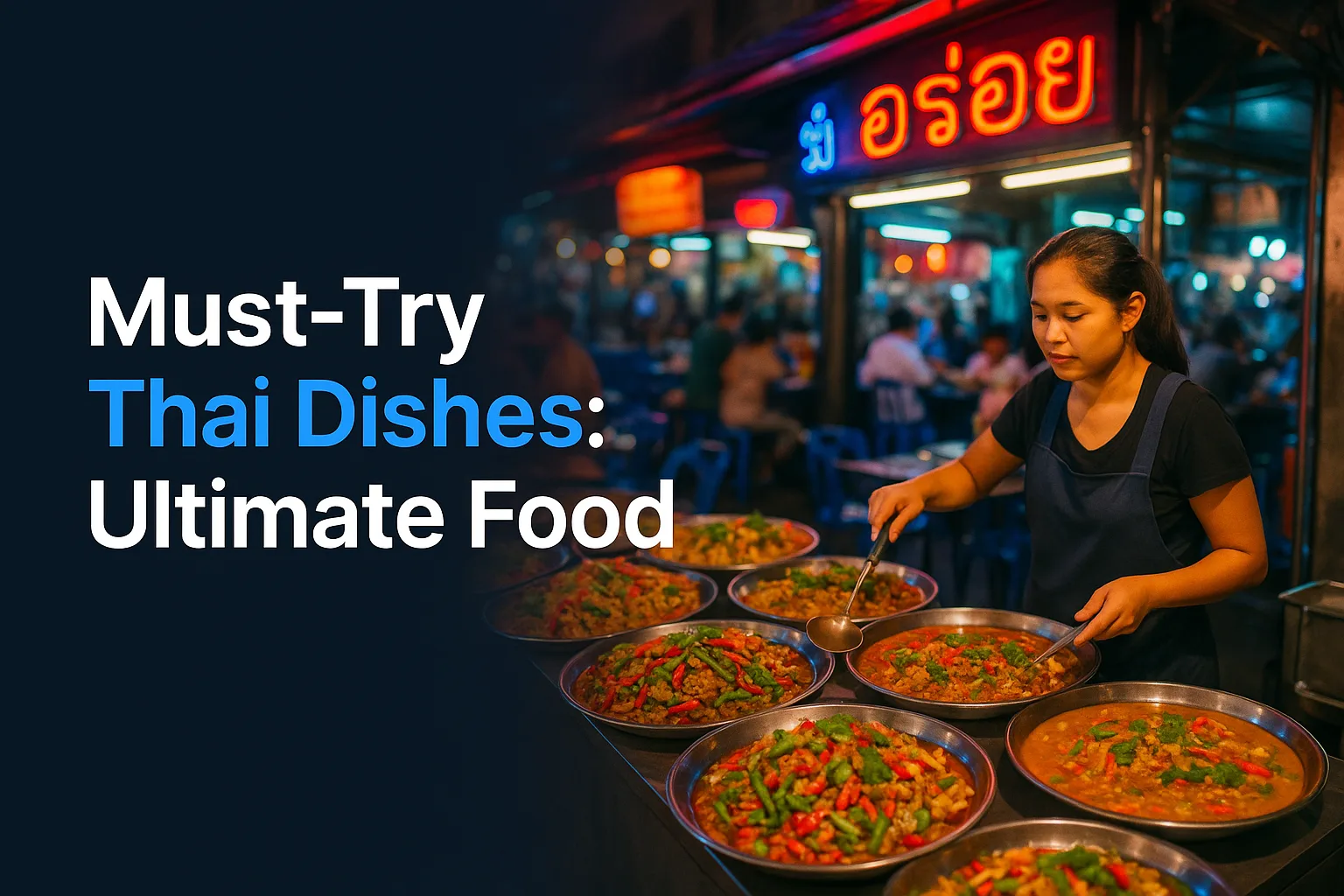
Street food is not just a budget option in Thailand - it is a cultural institution. The country's food markets, night bazaars, and roadside stalls represent some of the most authentic culinary experiences you can have anywhere in Asia.
Bangkok alone has thousands of street food vendors operating daily. The famous Yaowarat Road in Chinatown, Or Tor Kor Market near Chatuchak, and the street stalls around Silom and Sukhumvit are essential stops for any food lover.
Mango Sticky Rice (Khao Niew Mamuang)
This dessert is legendary for good reason. Mango sticky rice combines sweet glutinous rice cooked in coconut milk with ripe yellow mango and a drizzle of coconut cream on top. It is seasonal - the best mangoes come between April and June - but you can find versions of it year-round.
Price at a street stall: roughly 50 to 80 THB. Worth every baht.
Roti - Street-Side and Irresistible
Another TasteAtlas 2026 top 10 entry, Roti in Thailand bears the influence of the country's Muslim south and Indian trading history. It is a thin, flaky flatbread cooked on a hot griddle with condensed milk, banana, egg, or Nutella as toppings. Sweet versions are eaten as snacks or desserts; savory versions (with curry dipping sauce) are equally popular.
You will find Roti stands concentrated in the south - Phuket, Krabi, Hat Yai - and increasingly throughout Bangkok. A single Roti costs between 30 and 60 THB depending on toppings.
Satay and Grilled Skewers
Marinated pork, chicken, or seafood skewers grilled over charcoal are everywhere in Thai markets. Moo ping (grilled pork skewers) in particular are a beloved breakfast food - yes, breakfast - often eaten with sticky rice from a small plastic bag. A stick costs around 10 to 20 THB. You can easily eat five and spend under 100 THB.
Regional Specialties Worth Seeking Out
Khao Soi - The Northern Classic
If you visit Chiang Mai, Khao Soi is non-negotiable. This northern Thai dish is a coconut curry noodle soup topped with crispy fried noodles, pickled mustard greens, shallots, and a squeeze of lime. The combination of soft and crunchy noodles in a rich, mildly spiced broth is genuinely addictive.
A bowl in Chiang Mai costs between 60 and 100 THB at a local restaurant. The dish is also increasingly found in Bangkok and other cities as its reputation has grown nationally.
Massaman Curry - The Slow-Cooked Wonder
Massaman Curry has Persian and Indian roots and stands apart from other Thai curries with its use of dry spices like cardamom, cinnamon, and cloves. It is mild, slightly sweet, and deeply comforting. Usually made with beef and potatoes, it is slow-cooked until the meat is fall-apart tender.
Once ranked as the world's best food by CNN Travel, Massaman remains a benchmark dish for understanding the diversity of Thai cuisine.
Thai Cuisine in 2026: A New Era of Recognition
The Michelin Guide Thailand 2026 reflects a growing global appreciation for what Thai cooks have always known: this is a serious, complex culinary tradition. The addition of a third three-star restaurant in Thailand signals that fine Thai dining is now competing on equal terms with French, Japanese, and other traditionally dominant cuisines.
But Michelin stars do not change what makes Thai food special at its core. The best meal you will have in Thailand might well come from a plastic stool at a roadside cart, where a cook has been perfecting the same recipe for 30 years.
For more context on Thai culture and the best times to experience local food festivals and traditions, take a look at the Thai traditional festivals calendar for 2026 - many festivals feature extraordinary regional food you simply cannot find elsewhere.
For inspiration and deeper reading on Thai food culture, the Tourism Authority of Thailand's Thai Food Guide is a solid starting resource.
Practical Tips for Eating Well in Thailand
A Final Word on Eating in Thailand
Thai cuisine rewards curiosity. The more you explore - beyond Pad Thai and green curry, into Phanaeng, Khao Soi, Som Tum, and the extraordinary variety of regional dishes - the more you realize that what most of the world calls "Thai food" is just the surface of something genuinely vast and wonderful.
Eat at the market. Try the thing you cannot pronounce. Ask the vendor what their specialty is. In Thailand, food is always an invitation - and it is one well worth accepting.