Thailand New Parliament President Elected – March 19 2026
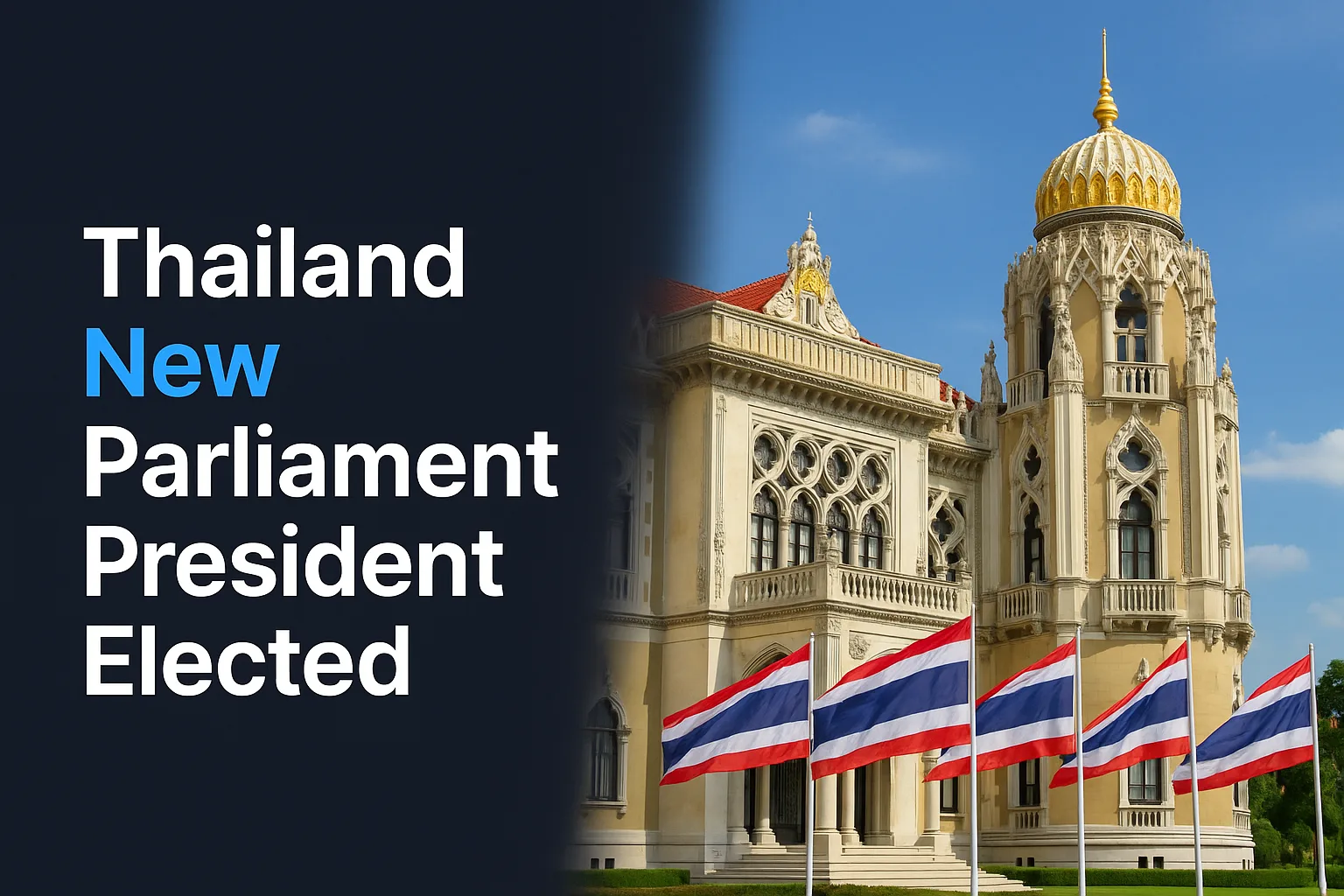
Thailand Gets a New House Speaker: What Just Happened on March 15, 2026
Thai politics moved fast this week. On Sunday, March 15, 2026, Thailand's newly elected House of Representatives held its first extraordinary session, and members voted to elect Sophon Saram as the new Speaker of the House. If you follow Thai news even casually, you probably noticed the buzz. If you didn't, here's a clear breakdown of what happened, why it matters, and what comes next.
The session itself was an unusual one. Because it was the first sitting of the new parliament, it had to be presided over temporarily by the senior-most member of the House. That role fell to Pairoj Lohsuntorn, a veteran lawmaker from the Pheu Thai party, who acted as interim chair until Sophon Saram was formally elected and sworn in as Speaker.
Who Is Sophon Saram?
Sophon Saram is a member of parliament representing the Bhumjaithai Party, one of Thailand's most established conservative political forces. Bhumjaithai, which translates loosely as "Thai Pride," has historically focused on regional development, agriculture, and economic policies aimed at rural communities. The party has significant support in Thailand's northeastern provinces, known collectively as Isan.
Sophon's election as House Speaker is significant for several reasons. The Speaker plays a central role in managing parliamentary sessions, controlling the legislative agenda, and ensuring that procedures run according to the constitution. In a country that has seen multiple coups and political disruptions over the past two decades, a stable, functioning parliament matters more than it might seem from the outside.
According to Thailand's National Assembly official website, the Speaker is elected by a simple majority of House members and serves as the formal link between the legislative and executive branches of government.
Why Was There a New Election in the First Place?
Thailand held general elections in February 2026, triggering this entire process. The vote produced a fragmented result, which is increasingly common in Thai politics. No single party won an outright majority of the 500 seats in the lower house. That meant coalition negotiations were essential before any new government could be formed.
Two major parties ended up bridging the gap: Bhumjaithai and Pheu Thai. Despite being ideological rivals in past political cycles, the two parties agreed to form a governing coalition. It's worth noting that Pheu Thai is broadly associated with the political legacy of former PM Thaksin Shinawatra, while Bhumjaithai has often positioned itself as a centrist or conservative counterweight. Their alliance is pragmatic rather than ideological, a very Thai political maneuver.
With the coalition in place and a new Speaker elected, the stage is now set for the most important vote: choosing Thailand's next Prime Minister.
The Prime Minister Vote: March 19, 2026
Sophon Saram, in one of his first acts as House Speaker, announced that the parliamentary vote to elect a new Prime Minister is scheduled for Wednesday, March 19, 2026. This is a critical moment. The PM nomination must be approved by a majority of the 500-seat House, and under the Thai constitution, certain procedures must be followed before a candidate can be formally presented.
The Bhumjaithai-Pheu Thai coalition commands enough combined seats to push through their preferred candidate without relying on smaller opposition parties. However, as Thai political history shows, coalition arithmetic doesn't always translate cleanly into actual votes. Last-minute defections, abstentions, and backroom deals are part of the political landscape here.
As of now, no single name has been officially confirmed as the coalition's joint PM candidate, though political insiders expect an announcement within the next 24 to 48 hours before the vote. Names from both coalition parties are reportedly under discussion.
What Does This Mean for Thailand's Stability?
For the roughly 3 million foreign nationals living in Thailand as long-term residents or expatriates, political transitions like this one naturally raise questions. Will policies change? Will there be disruptions? Will the baht be affected?
The short answer, based on past patterns, is: probably not dramatically in the short term. Thailand has a deep administrative infrastructure that continues functioning regardless of who holds the top political seats. Immigration rules, visa procedures, property laws, and business regulations do not change overnight following an election.
That said, a new government does set priorities. If the Bhumjaithai-Pheu Thai coalition follows through on its platform, Thailand could see increased investment in rural infrastructure, adjustments to agricultural subsidies, and potentially new tourism incentives. Pheu Thai has historically been pro-investment and pro-tourism, which could bode well for the expat and visitor community.
The Thai baht (THB) saw minor fluctuations in the days leading up to the March 15 session, trading between 33.8 and 34.2 THB per USD, well within normal ranges. Financial analysts do not currently anticipate major currency volatility tied to the political transition, barring unexpected constitutional challenges.
If you want a broader picture of how Thailand's current environment is shaping up for tourists and long-term visitors, our detailed overview of tourism in Thailand in 2026, including global tensions and on-the-ground realities, covers a lot of the context you need.
A Quick Look at Thailand's Political Structure
For readers less familiar with how Thai government works, here's a quick refresher. Thailand is a constitutional monarchy with a parliamentary system. The King is the head of state but plays a largely ceremonial role in the day-to-day running of government. Real executive power sits with the Prime Minister and the Cabinet.
The parliament has two chambers:
- The House of Representatives (Lower House) - 500 members elected by popular vote, responsible for passing legislation and electing the Prime Minister.
- The Senate (Upper House) - 200 members, with a more limited constitutional role compared to the pre-2024 framework, following senate reforms.
The Speaker of the House, in this case Sophon Saram, presides over the lower chamber and plays a key organizational role in the legislative process. It's not an executive position, but it is influential, especially in managing sensitive debates and legislative timelines.
What Comes After March 19?
Once the new Prime Minister is elected by the House, the process moves quickly. The PM-designate typically has around 15 to 30 days to form a cabinet and present it for royal endorsement. Once the cabinet is in place, the new government officially takes over from the caretaker administration that has been managing day-to-day affairs since the February election.
For most people living in or traveling to Thailand, daily life will continue as normal throughout this transition. Airports, hospitals, government offices, banks, and embassies all operate under systems that are not directly tied to who sits in the PM's chair on any given week.
What could change over the coming months are things like tourism promotion budgets, visa policy priorities, and foreign investment incentives. The new government will present its policy agenda to parliament within 15 days of formation, which will give a clearer picture of the direction Thailand is heading in the second half of 2026.
Staying Informed as an Expat or Traveler
Political news in Thailand can sometimes feel overwhelming, especially when reported through the lens of its complex history. The key for expats and visitors is to separate noise from signal. Thailand's democratic institutions, despite their turbulent history, are currently functioning through a legitimate electoral process. That's worth noting.
Keep an eye on official announcements over the next week. The March 19 vote will likely generate significant local and international media coverage. If a new PM is confirmed without constitutional challenges, the transition should be smooth and relatively uneventful from a practical standpoint.
Thailand remains one of Southeast Asia's most visited and most lived-in countries for a reason. Its resilience, hospitality, and administrative continuity have consistently outlasted its political drama. The events of March 2026 are a reminder that the country is very much a living, evolving democracy, and that's worth understanding for anyone who calls it home or plans to.