Thai Merchant Vessel Attacked in the Strait of Hormuz: What Expats Need to Know
A Thai Bulk Carrier Hit Twice in the Strait of Hormuz
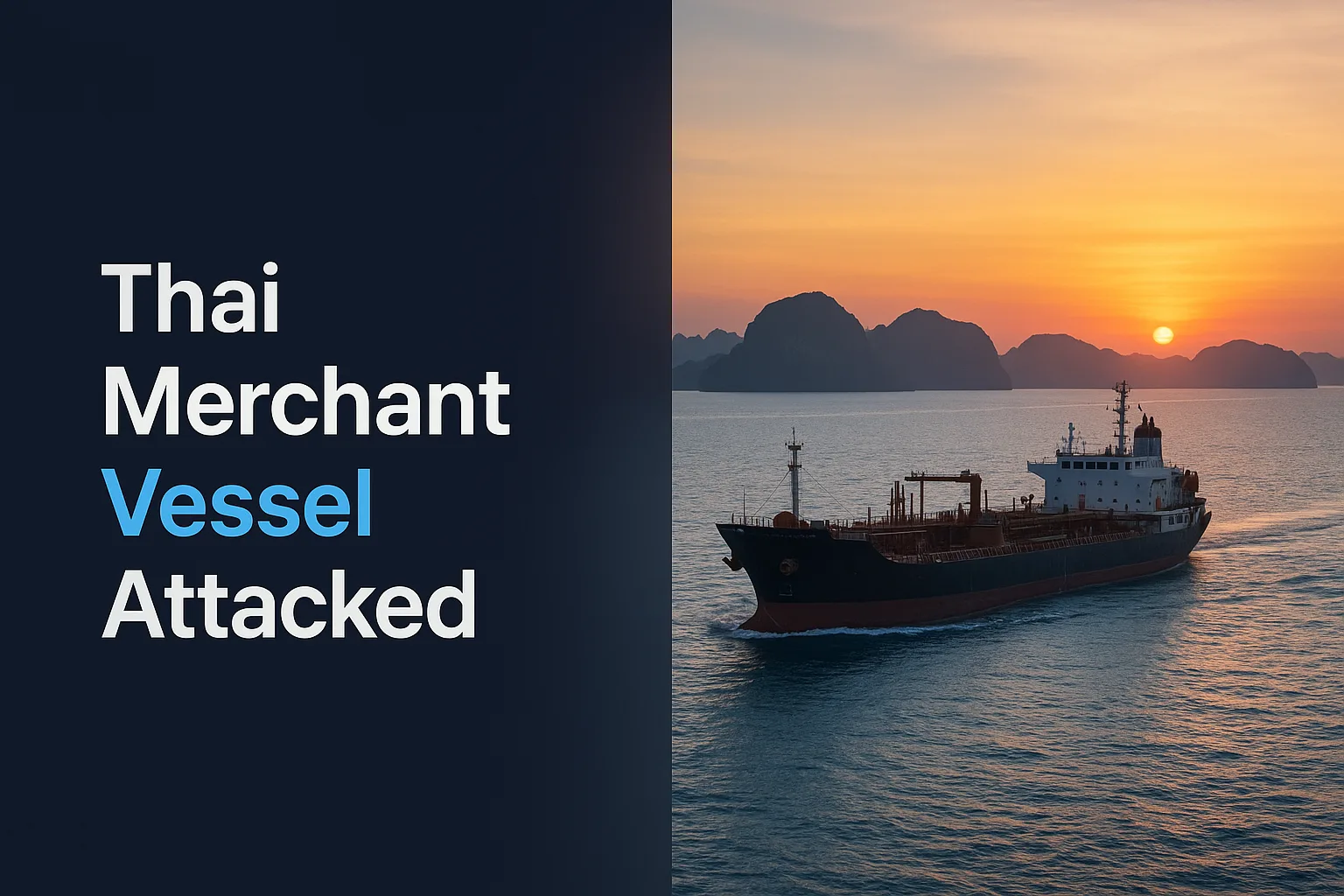
On March 12, 2026, the Thai bulk carrier Mayuree Naree was struck by two projectiles while transiting the Strait of Hormuz, one of the world's most strategically critical shipping lanes. The impact damaged the vessel's engine room and triggered a fire on board. Three crew members went missing in the chaos that followed.
This was not an isolated incident. Since February 28, 2026, at least 16 vessels have been targeted in the Persian Gulf, according to multiple international sources including Le Figaro and BFMTV. Iran has been cited as the likely responsible party, though no official confirmation has been issued at the time of writing. The situation in the Middle East has been deteriorating for months, and maritime routes through the Gulf are bearing the brunt of those tensions.
For Thailand, a country with a significant merchant marine workforce, this attack hit close to home, literally and figuratively.
Twenty Thai Sailors Make It Home - Three Still Missing
On Monday, March 16, 2026, 20 surviving crew members of the Mayuree Naree landed back in Thailand, according to AFP. Their return came four days after the attack - four days that their families had spent waiting for news, much of it incomplete or contradictory in the early hours of the incident.
The fate of the three missing sailors remains unclear at this stage. Search and rescue operations were complicated by the fire on board and the general instability of the region. Thai authorities, including the Thai Ministry of Foreign Affairs, have been in contact with relevant parties to obtain information and provide consular support to the crew and their families.
This kind of crisis puts a spotlight on how exposed Thai workers in the maritime sector truly are - and how quickly a routine transit can turn into a life-threatening situation.
The Strait of Hormuz: Why It Matters So Much
If you've heard the name before but aren't entirely sure where it is or why it matters, here's a quick breakdown. The Strait of Hormuz is a narrow waterway between Oman and Iran, connecting the Persian Gulf to the Gulf of Oman and, from there, to the broader Indian Ocean. It is estimated that roughly 20% of the world's oil supply passes through this strait every day.
That makes it one of the most strategically important - and most contested - maritime corridors on the planet. When tensions rise in the Middle East, ships transiting the Strait of Hormuz are among the first to feel it. Cargo vessels, oil tankers, bulk carriers: they all pass through, and they all take on risk when the geopolitical temperature goes up.
For Thai maritime workers, many of whom serve on vessels operating in the Gulf region, this is not an abstract geopolitical story. It is their daily reality.
Thailand's Maritime Workforce: A Sector Under Pressure
Thailand has a long tradition of sending sailors into the global merchant marine. Thousands of Thai nationals work aboard international vessels at any given time, transporting goods across Asia, the Middle East, and beyond. The shipping industry represents a meaningful source of income for many Thai families, particularly in coastal provinces.
Typical contracts for Thai merchant sailors can range from 4 to 9 months at sea, with monthly salaries that often start around 30,000 to 60,000 THB for junior roles and can exceed 120,000 THB for officers and engineers, depending on the vessel type and flag state. These are significant earnings by Thai standards, which is exactly why so many choose this career path despite the risks.
But the March 2026 attack on the Mayuree Naree is a stark reminder that risk assessment in this industry needs to be updated regularly. The Gulf region was already considered a high-risk zone before this latest wave of attacks. With 16 vessels targeted in under two weeks, it has moved firmly into a different category.
What This Means for Thai Expats Living in the Middle East
Beyond the maritime sector, there is a broader community of Thai expatriates living and working across the Middle East - in the UAE, Qatar, Bahrain, Saudi Arabia, Kuwait, and Oman. Many are employed in construction, hospitality, domestic work, or healthcare. According to Thai government data, over 200,000 Thai nationals are registered as working or residing in the Gulf Cooperation Council (GCC) countries.
For this community, the escalating tensions in the region are not just background noise. They raise genuine practical questions:
The 20 crew members who landed back in Thailand on March 16 are the lucky ones. Three of their colleagues are still unaccounted for. In a situation like this, being prepared isn't paranoia - it's the most practical thing you can do.