Sukhothai Temples: The Complete Guide to Thailand's Ancient Capital
Why Sukhothai Should Be on Every Thailand Itinerary
Most travelers rush straight to Bangkok, Chiang Mai or the southern islands, and completely miss one of the most breathtaking places in the entire country. Sukhothai, located in northern-central Thailand, was the very first capital of the Thai kingdom - founded in the 13th century and now a UNESCO World Heritage Site. Walking among its ancient ruins, lotus-filled ponds and towering Buddha statues feels like stepping into another world entirely.
In 2026, interest in Sukhothai is surging again. Travel writers and bloggers have been publishing full guides at a rapid pace, and the park has been drawing visitors looking for something deeper than beach resorts. Whether you're a history lover, a photographer chasing golden-hour shots, or simply someone who wants a break from the tourist crowds, Sukhothai delivers in a big way.
This guide covers everything you need to know before visiting: the best temples to see, how to get there, what to budget, where to stay, and how to experience the famous evening Light and Sound event. Let's get into it.
A Brief History of Sukhothai - Thailand's Cradle of Civilization
The Sukhothai Kingdom was established around 1238 AD, when two Thai chieftains overthrew the Khmer rulers of the region. Under King Ramkhamhaeng the Great, the kingdom flourished - the Thai alphabet was created here, Theravada Buddhism took root as the dominant religion, and the arts and architecture reached new heights.
At its peak, Sukhothai controlled a vast territory stretching across much of mainland Southeast Asia. The city was meticulously planned, with city walls, moats, temples and palaces all laid out in a deliberate grid. Today, the Sukhothai Historical Park preserves this extraordinary legacy. It was declared a UNESCO World Heritage Site in 1991, together with the nearby Si Satchanalai and Kamphaeng Phet historical parks.
How the Park Is Organized - Zones You Need to Know
Sukhothai Historical Park is divided into five zones, each with its own entrance fee. You don't have to visit all of them - most people focus on the Central Zone, which contains the most impressive ruins. Here's a quick breakdown:
- Central Zone: The heart of the park. Home to Wat Mahathat, Wat Si Sawai and the Royal Palace. This is where most visitors spend the bulk of their time.
- North Zone: Quieter and more forested. Features Wat Si Chum, home to the famous gigantic seated Buddha known as Phra Achana.
- South Zone: Contains Wat Chetuphon, known for its walking Buddha reliefs. Very peaceful and often empty.
- East Zone: Less visited. Has Wat Trapang Tong Lang with its beautiful stucco reliefs.
- West Zone: The most remote zone. Features Wat Saphan Hin, a temple set on a hilltop with panoramic views over the park.
The Must-See Temples in Sukhothai
Wat Mahathat - The Crown Jewel
If you only visit one temple in Sukhothai, make it Wat Mahathat. This was the spiritual and administrative center of the ancient kingdom - the equivalent of a royal cathedral. The complex contains over 200 individual structures including chedis, mondops and Buddha statues, spread across a large moat-enclosed area.
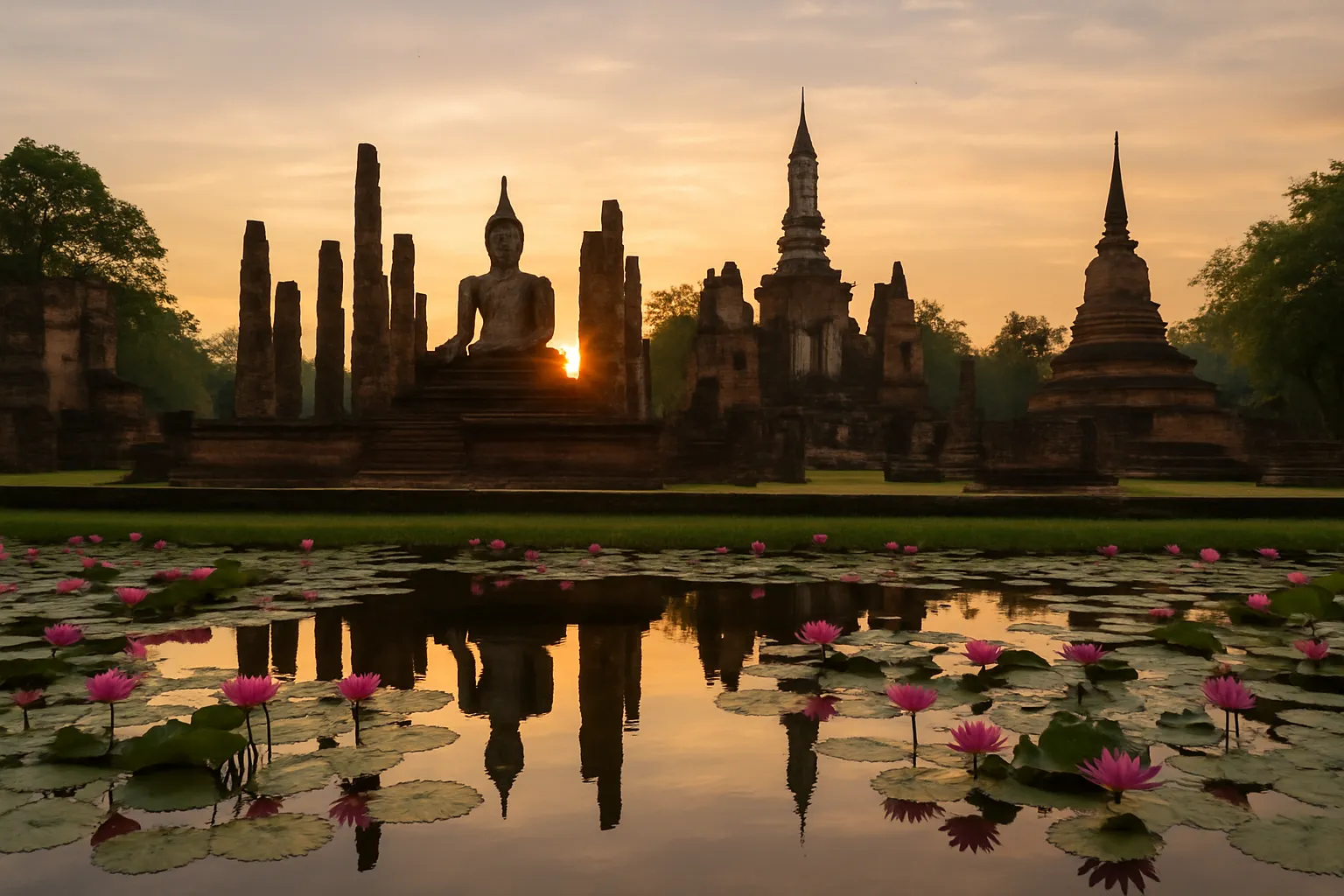
The most iconic image of the site is the lotus-bud chedi style that became the signature of Sukhothai architecture. Standing in front of the main prang at golden hour, surrounded by still water and lily pads, is genuinely one of the most photogenic moments you'll find anywhere in Southeast Asia.
Walking through Wat Mahathat at dawn, when the mist still clings to the lotus ponds, feels less like tourism and more like time travel.
Wat Si Chum - The Giant Buddha
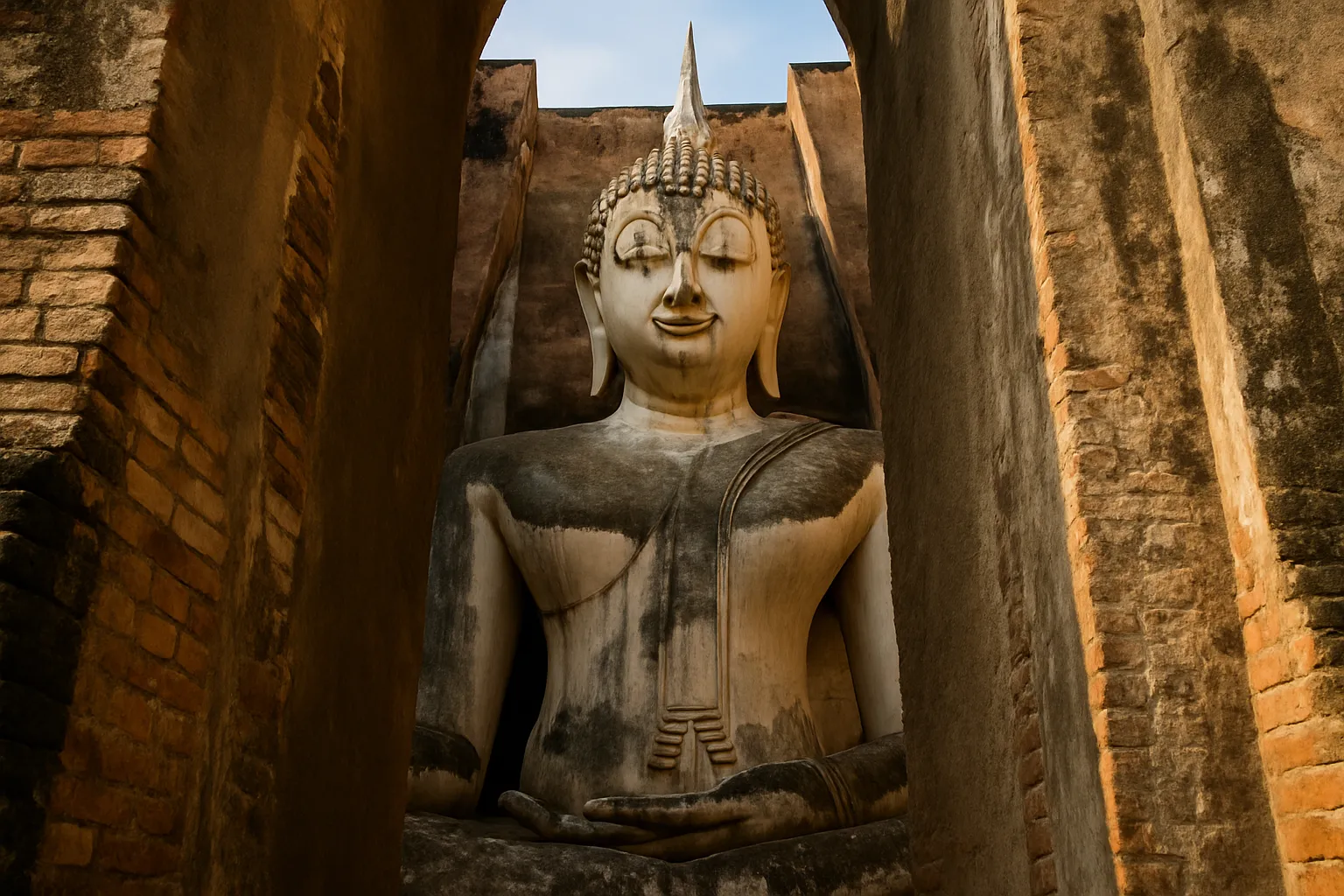
Located in the North Zone, Wat Si Chum is unforgettable. The main structure is a massive mondop - a square enclosure with an incredibly narrow slit opening in one wall. Through that opening, you come face to face with the Phra Achana, a seated Buddha measuring 11.3 meters wide. The sheer scale of it, framed by the stone doorway, is jaw-dropping.
Inside the mondop, a hidden staircase within the walls leads to the top - it used to be accessible, though access may be restricted depending on conservation work ongoing in 2026. Check on-site when you arrive.
Wat Si Sawai - The Khmer Connection
This temple stands out immediately because of its three Khmer-style prangs (towers). Before Sukhothai was a Thai kingdom, this area was under Khmer control, and Wat Si Sawai was originally built as a Hindu shrine. It was later converted to a Buddhist temple. Walking around the moat that encircles it at sunset is a genuinely magical experience.
Wat Sa Si - Serenity on the Water
Set on a small island in the middle of a large pond, Wat Sa Si is one of the most serene spots in the park. The white chedi reflects perfectly in the still water, and the whole scene feels almost too beautiful to be real. This is another excellent spot for sunrise photography - arrive before 7am if you want the place nearly to yourself.
Wat Saphan Hin - The Hilltop View
In the West Zone, Wat Saphan Hin requires a short uphill walk along a slate-paved path ("Saphan Hin" literally means "stone bridge"). At the top, a large standing Buddha overlooks the entire Sukhothai plain. It's more of a hike than the other sites, but the panoramic view at the top makes it completely worth the effort.
The Light and Sound Event - Sukhothai After Dark
One of the most talked-about experiences in Sukhothai right now is the Mini Light and Sound event at the historical park. In 2026, the event continues to draw visitors who want to experience the ruins after the sun goes down. The temples are illuminated with carefully designed lighting - warm golds, deep reds and cool blues - transforming the already stunning landscape into something almost otherworldly.
Projections, ambient soundscapes and traditional Thai music accompany the light display. The event typically runs from around 7pm to 9pm on designated evenings. Entry is generally included with your park admission ticket, so there's no extra charge. Check with the park office or your accommodation for the current schedule when you arrive, as dates can vary by season.
Practical Information: Getting to Sukhothai
Sukhothai is located about 440 km north of Bangkok. You have several realistic options for getting there:
When to Go - Timing Your Visit Right
The best months to visit Sukhothai are November through February. This is the cool and dry season - temperatures hover around 25-30°C during the day, and the mornings can actually feel pleasantly cool. The light is also at its most beautiful during this period, with clear skies and golden morning mist over the ponds.
March to May brings extreme heat, with temperatures regularly exceeding 38-40°C. Visiting at this time is not impossible, but you'll want to arrive at the park right at opening (6:30am) and leave by midday. The rainy season (June to October) makes the park lush and green, but heavy downpours can interrupt your visit. October and November can actually be lovely - the rains are tapering off and the park is full of water and greenery.
Entry Fees and Budget
Each zone of Sukhothai Historical Park charges a separate admission fee:
- Each zone: 100 THB per person for foreigners
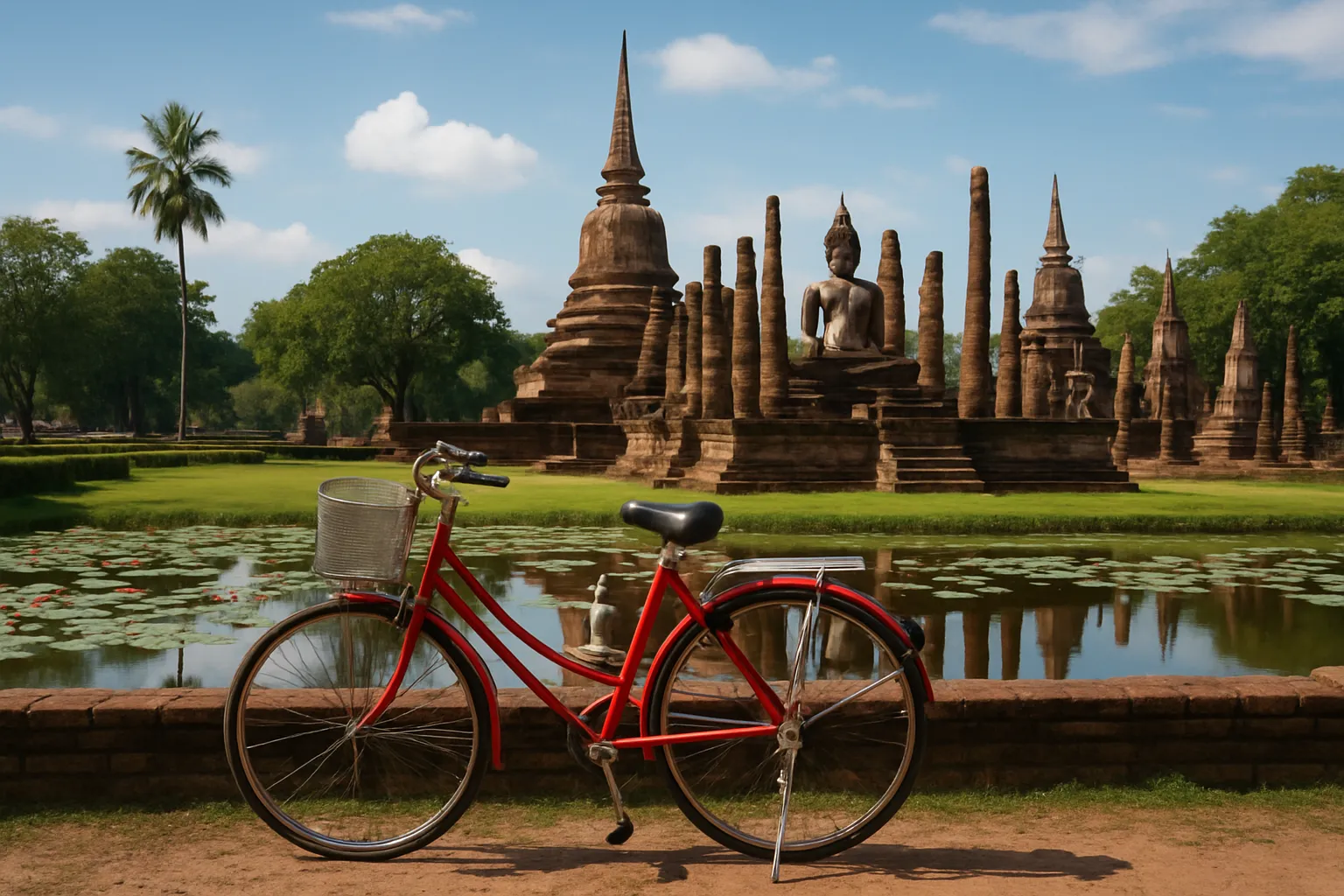
- Bicycle rental: 30-50 THB per day at the park entrance
- Combined multi-zone ticket: Around 350 THB (check current pricing on arrival as it can update annually)
- Motorbike rental: Available in town for around 200-300 THB per day
For accommodation, Sukhothai has a good range of options from budget guesthouses at 400-600 THB per night to mid-range hotels at 800-1,500 THB. Many travelers stay in "New Sukhothai" (the modern town) which is about 12 km from the historical park, and use local buses or tuk-tuks to reach the ruins each day.
Temple Etiquette - What to Know Before You Go
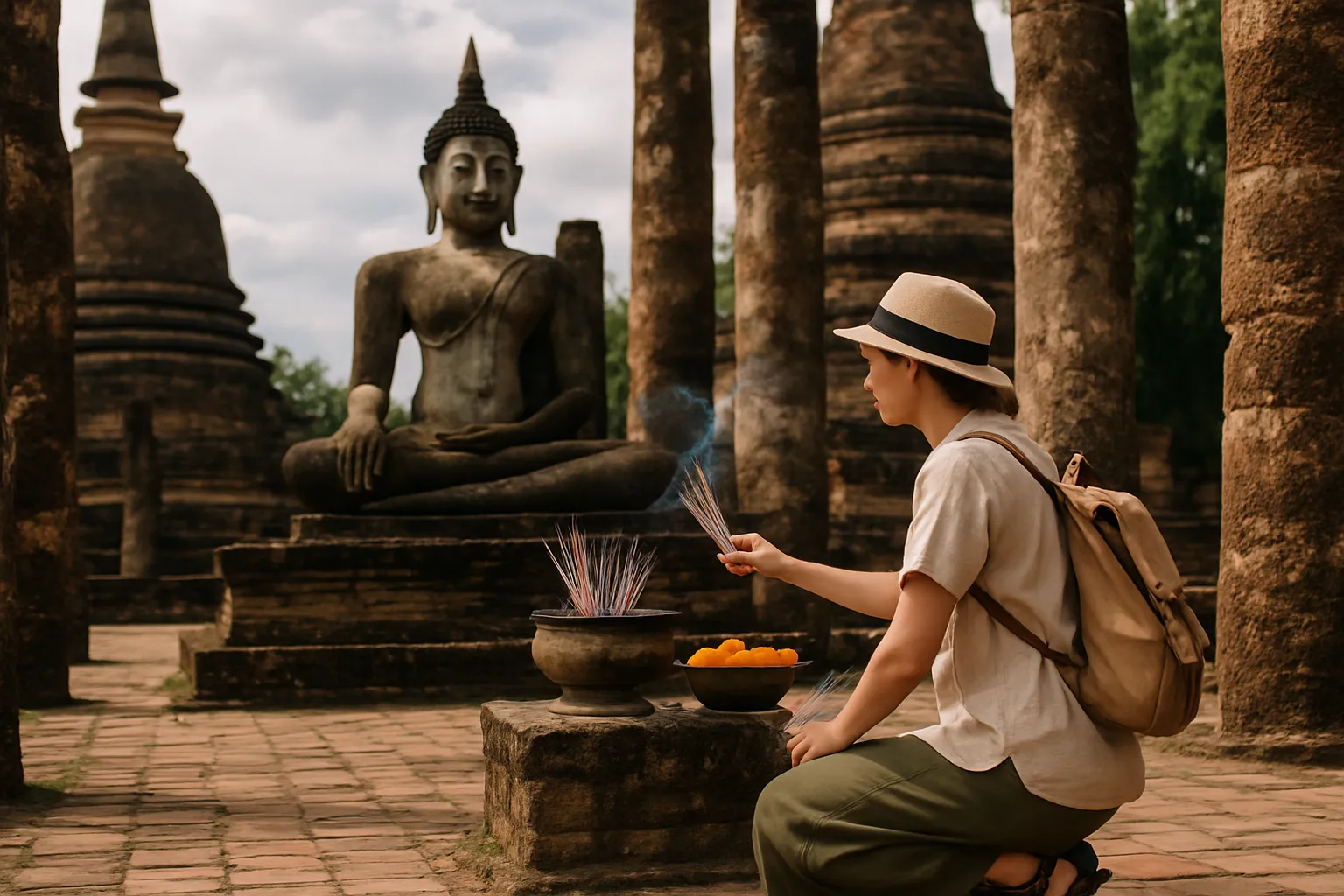
Sukhothai's temples are active religious sites as well as archaeological monuments. Showing respect is both expected and genuinely appreciated by locals. A few key things to keep in mind:
- Dress modestly - cover your shoulders and knees when entering temple buildings
- Remove your shoes before entering any enclosed shrine or chapel
- Never touch or climb on the ancient statues or ruins - they are fragile and sacred
- Keep your voice down inside active worship areas
- Do not point your feet toward Buddha images when sitting
- Drone flying requires a special permit - don't assume it's allowed
For a broader look at how to behave respectfully throughout your time in Thailand, this Thai etiquette checklist covers all the key customs and social rules you should know before your trip.
Detailed heritage and conservation guidelines for the park are managed by the Thailand Fine Arts Department, which oversees the protection of all national historical parks.
Where to Eat Near the Park
Food options directly inside the historical park are limited to a small cafe near the main visitor center. For a proper meal, head into town. New Sukhothai has a lively night market on Pravet Nakhon Road where you can try local specialties including:
- Sukhothai noodles (kuay tiao Sukhothai): The local variation of rice noodle soup, served with green beans, dried chili and ground pork. A must-try.
- Pad Thai: Yes, it exists everywhere, but Sukhothai's street version is freshly made and delicious.
- Mango sticky rice: Available at most market stalls, especially in the evening.
Expect to spend 60-120 THB per dish at local restaurants. The food scene is unpretentious and genuinely good.
Day Trips from Sukhothai
If you have more than two days in the area, there are some excellent day trips worth considering:
- Si Satchanalai Historical Park: About 55 km north of Sukhothai, this is the sister UNESCO site and arguably even less crowded and more atmospheric. A full day here is highly rewarding.
- Kamphaeng Phet: Another UNESCO-listed historical park, about 70 km south. Features some of the most impressive laterite ruins in Thailand in a jungle setting.
- Phitsanulok: 55 km away, home to Wat Phra Si Rattana Mahathat, one of the most revered temples in Thailand and worth a half-day visit.
Final Tips for Making the Most of Sukhothai
A few last practical notes to help your visit go smoothly:
- Arrive at the Central Zone at opening time (6:30am) for the best light and smallest crowds.
- Bring plenty of water - the park has limited shade in the middle zones.
- Sunscreen and a hat are essential, especially from February onward.
- ATMs are available in New Sukhothai town but rare near the park itself - carry cash.
- Grab a printed or digital park map at the visitor center on arrival - the zones are spread out and signage inside the park is minimal.
- Two full days is the sweet spot for seeing everything properly without rushing.
Sukhothai is one of those places that tends to surprise people. You might arrive expecting a dusty archaeological site and leave having had one of the most peaceful and visually stunning experiences of your entire trip to Thailand. It has a quiet, unhurried energy that's increasingly rare to find in Southeast Asia's most visited destinations.