Floating Markets in Thailand: The Complete Visitor's Guide for 2026

Why Floating Markets Still Matter in Thailand in 2026
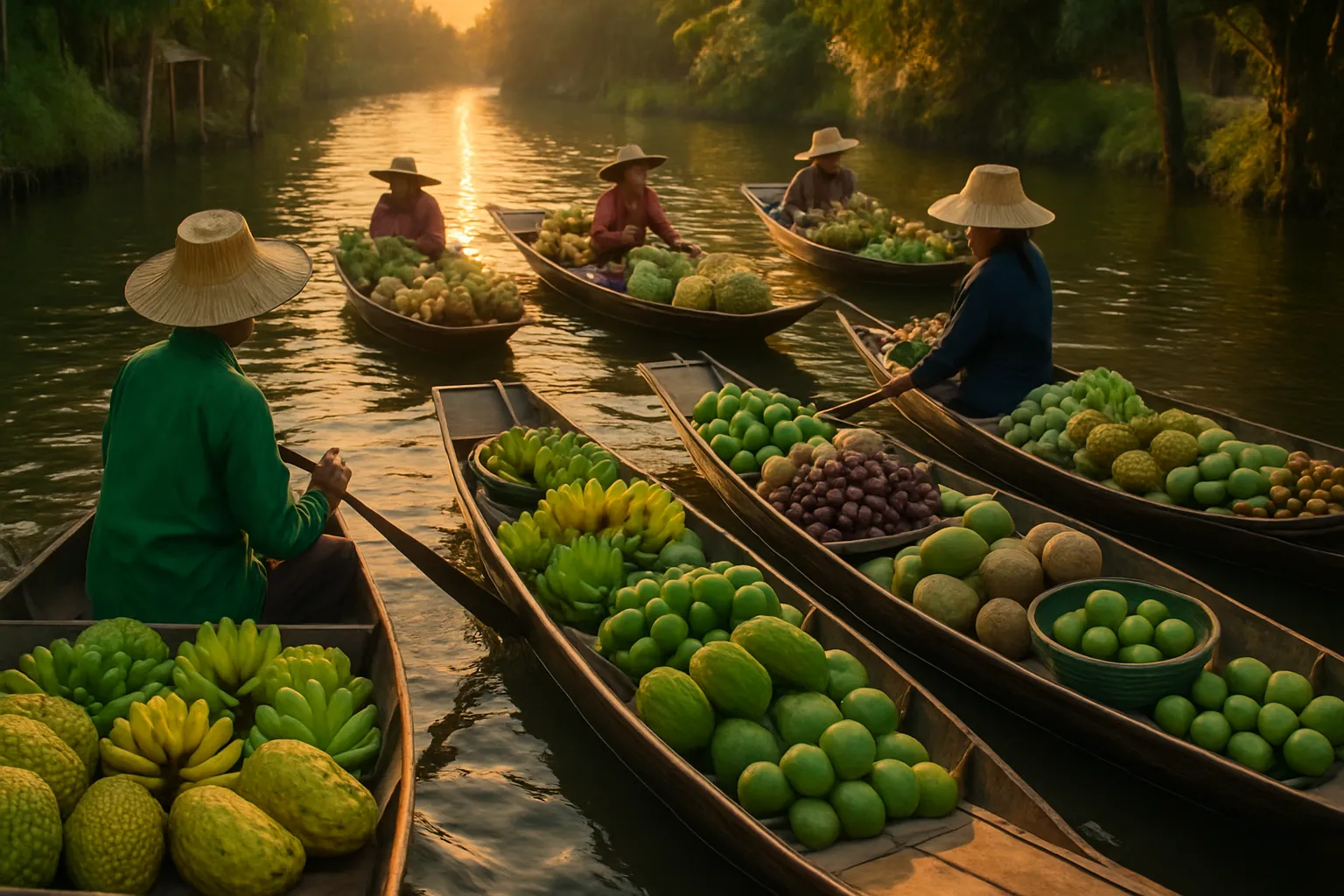
There is something genuinely magical about watching a vendor in a wide-brimmed hat paddle a wooden boat loaded with fresh papaya, grilled corn and sticky rice through a narrow canal at sunrise. Thailand's floating markets have been a fixture of the country's cultural identity for centuries, long before they became a staple on every tourist itinerary. Today, the challenge is knowing which ones are worth your time, which have turned into photo-op theme parks, and which hidden gems still offer the real thing.
This guide covers everything you need to plan a smart visit: the classic markets, the underrated alternatives, how to get there, what things cost and a few tips that will make your experience far better than average. Whether you are spending a week in Bangkok or settling in Thailand long-term, at least one floating market visit belongs on your list.
Understanding Thailand's Floating Market Culture
Floating markets, known locally as talat nam, were once a practical solution to geography. Central Thailand is crisscrossed by rivers and canals - the khlongs - and for communities living along waterways, trading from boats was simply the most efficient way to buy and sell food. Bangkok itself was sometimes called the "Venice of the East" in the 19th century, with its vast canal network serving as the main arteries of daily life.
As road infrastructure improved through the 20th century, many of these water-based markets gradually declined or disappeared. A handful survived, and some were deliberately revived as tourism assets. The distinction between an organic market and a staged attraction matters a lot when you are deciding where to spend your morning.
As a general rule: the more boats you see selling fridge magnets, the less authentic the market. The more you see locals actually buying ingredients for dinner, the more real the experience. Use that as your compass.
Damnoen Saduak: The Classic, the Crowded, the Unmissable
Let's address the elephant in the room first. Damnoen Saduak in Ratchaburi Province, about 100 km southwest of Bangkok, is the floating market most people picture when they search for "floating markets Thailand." It is photogenic, well-organized and very, very touristy. Klook and Viator both feature it as part of a standard day-trip circuit often combined with the Maeklong Railway Market - a format that has become extremely popular again in 2026.
Does that make it bad? Not necessarily. The market genuinely looks like a movie set: wooden boats piled high with colorful produce, vendors in traditional clothes, narrow canals flanked by old wooden shophouses. The visuals deliver. But manage your expectations:
- Arrive before 8:00 AM if you want any semblance of calm. By 9:30 AM it is packed with tour groups.
- A short boat ride costs between 300 and 500 THB for 30 minutes, negotiated on the spot. Some operators try to charge more - agree on the price before you step in.
- Food prices at the floating stalls are higher than at any local market. Budget around 50-150 THB per snack item.
- The entry to the market area itself is free, though the boat ride is the main experience.
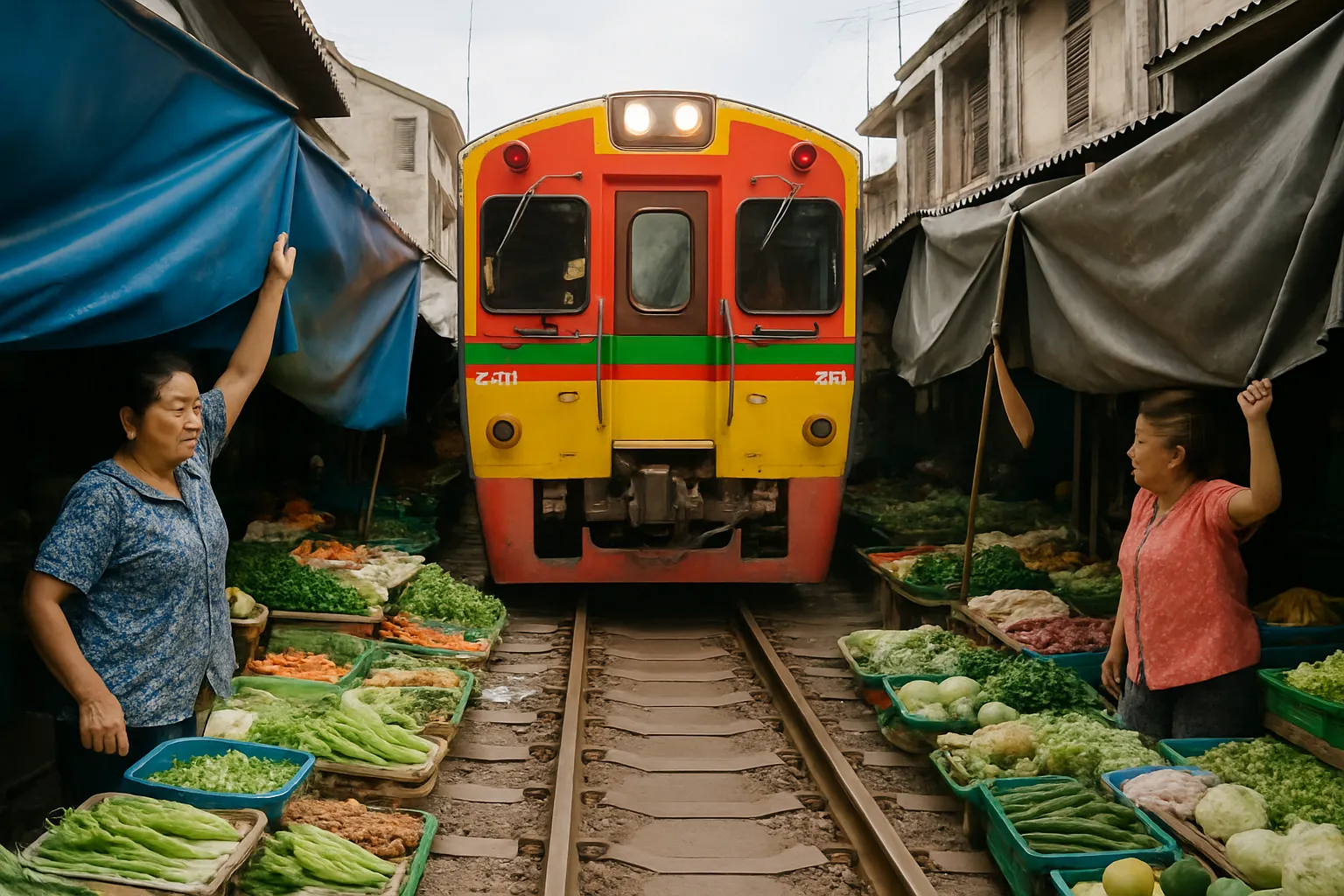
The combined day trip with Maeklong Railway Market is genuinely worth it. Maeklong is a real, functioning market built along active train tracks. When a train approaches, vendors retract their awnings in a choreographed display that has to be seen to be believed. Train schedules mean the "umbrella pull" happens several times a day, making it easy to time your visit.
Taling Chan: The Bangkok Weekend Market Making a Comeback
Taling Chan Floating Market sits on the edge of Bangkok's Thonburi district, about 30 minutes from central Bangkok by taxi or Grab. It has been around for decades but fell off the tourist radar for a while. In early 2026, it is clearly trending again, and for good reason.
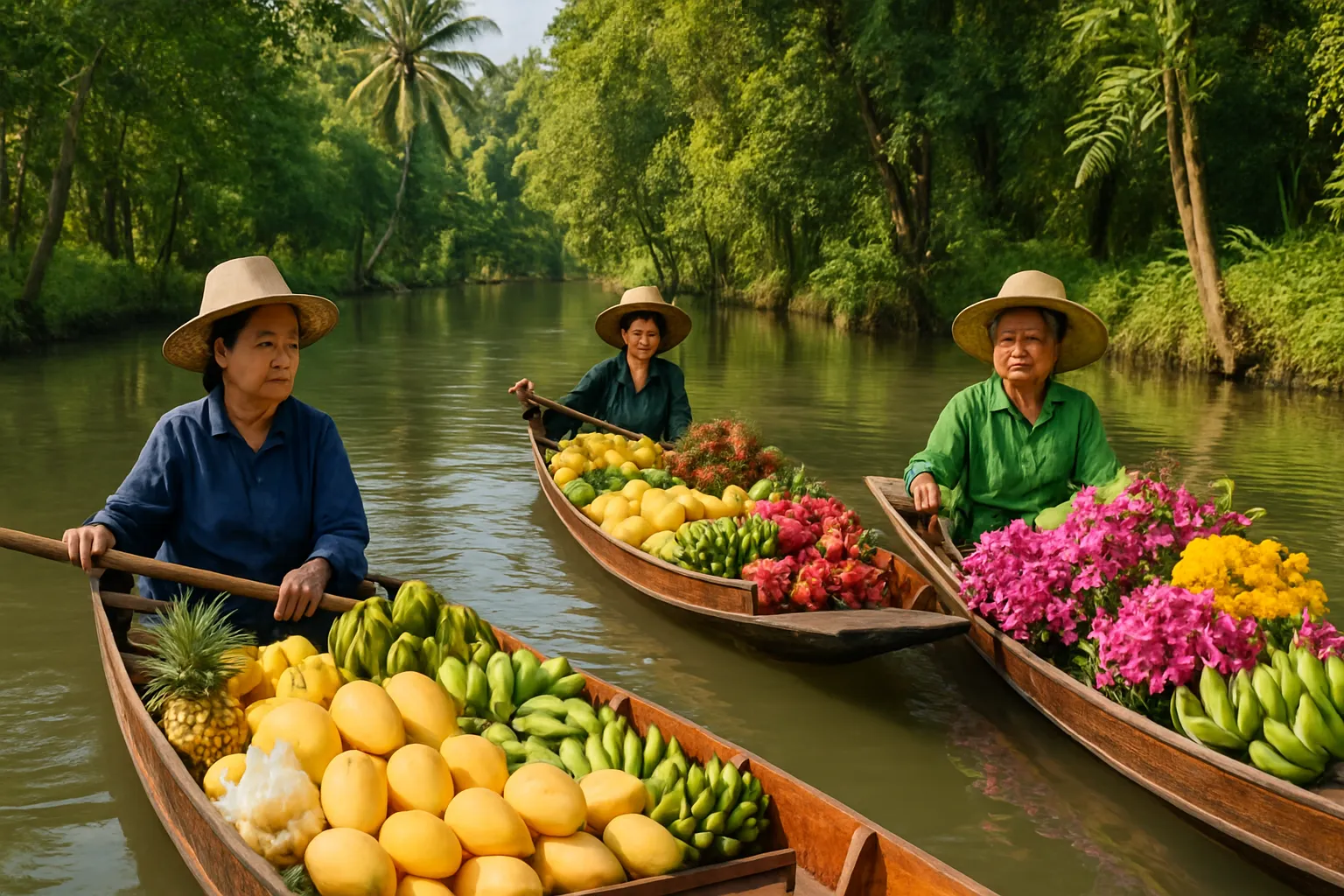
Unlike Damnoen Saduak, Taling Chan still functions as a genuine neighborhood market. Local families come here on weekend mornings to eat seafood, browse fresh produce and sit on wooden platforms suspended over the khlong. The boats that pull up alongside are mostly food boats - grilled fish, coconut-based desserts, fresh-cut fruit - rather than souvenir sellers.
Key facts about Taling Chan:
- Open only on weekends and public holidays, typically from around 8:00 AM to 5:00 PM.
- Free entry - no admission charge at all.
- Food is affordable by Bangkok standards: a full seafood meal on the waterside platforms runs 150-300 THB per person.
- Getting there: take a taxi or Grab to Taling Chan Floating Market (map it as "ตลาดน้ำตลิ่งชัน"). The Chao Phraya Express Boat does not serve this area directly, so a taxi is easiest from central Bangkok.
- It is much smaller than Damnoen Saduak, so one to two hours is plenty of time.
It works especially well as a half-day trip combined with a visit to the nearby Wat Suwannaram or a long-tail boat tour through the Thonburi canals. Good for families, easy logistics and genuinely local in character.
Tha Kha: Thailand's Best-Kept Floating Market Secret
If authenticity is your priority, Tha Kha Floating Market in Samut Songkhram Province is the one to seek out. It is about 70 km southwest of Bangkok and sits deep inside a network of orchards and fruit gardens threaded by canals. The setting alone - tall coconut palms, wooden stilt houses, boats gliding under a canopy of greenery - feels like stepping back 50 years.
Here is the catch: Tha Kha operates on a very specific schedule tied to the local tide cycle. It runs on weekends and certain public holidays, and only when the tidal conditions allow boats to navigate the shallow canals. In practical terms, this means the market is active roughly from 6:00 AM to 11:00 AM on operational days. Miss that window and you will find an empty pier.
Tips for visiting Tha Kha successfully:
- Check the schedule in advance - local Facebook groups and recent travel blogs (including a detailed mention in a Vietnamese travel feature from April 2026) often publish the monthly calendar.
- Hire a long-tail boat from the main pier to explore the deeper canal sections, where vendors sell directly from their orchards. Prices are negotiable and typically around 100-200 THB per person for a shared boat.
- The market is almost entirely food and fresh produce. You will not find many souvenirs here, which is precisely the point.
- Combine the trip with Damnoen Saduak or the nearby Amphawa market since both are in the same general region, making a full-day circuit very doable.
Entry to the Tha Kha market area is free. It remains one of the most genuinely off-the-beaten-path experiences accessible from Bangkok without needing to fly or take a lengthy overnight journey. If you enjoy discovering hidden sides of Thailand, you might also appreciate our guide to secret islands of Thailand for more under-the-radar destinations.
Amphawa: The One for Evening Atmosphere
Amphawa Floating Market in Samut Songkhram is often visited alongside Tha Kha or Damnoen Saduak on a day trip from Bangkok. Its character is different from the others: it comes alive on Friday evenings and over weekends, transforming into a lively night market along a canal lined with shophouses.
Highlights:
- Open Friday to Sunday, afternoon and evening (roughly 3:00 PM to 10:00 PM).
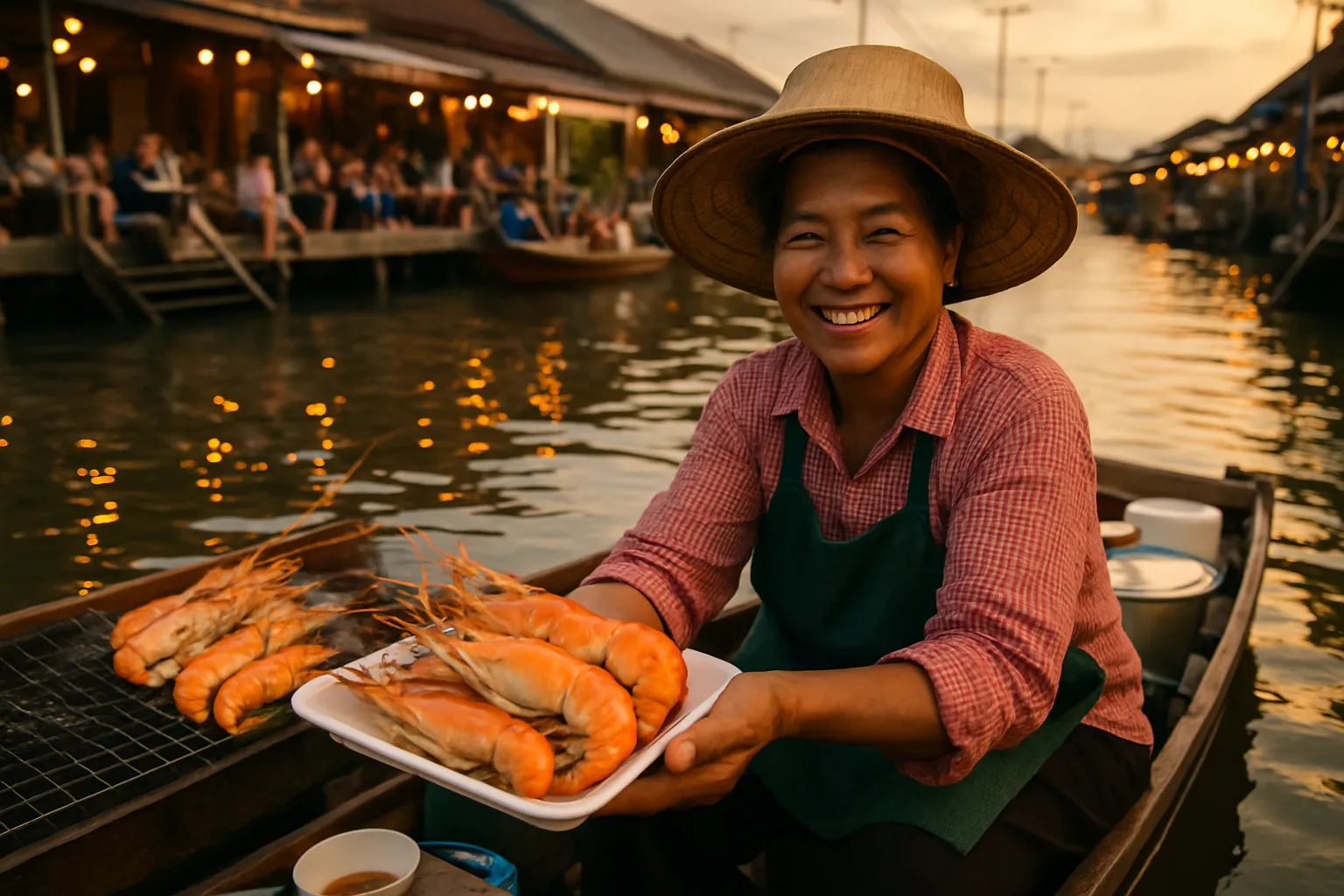
- Famous for grilled seafood boats that moor alongside wooden walkways - ordering from a boat floating next to your table is genuinely fun.
- Evening firefly boat tours along the mangroves are a popular add-on, typically costing 60-80 THB per person on a shared boat. The firefly displays peak between June and September.
- The town around the market has charming guesthouses in old wooden shophouses, making an overnight stay very pleasant.
- Weekend crowds can be significant, especially on Saturday nights.
Amphawa works particularly well as an overnight trip rather than a rushed day visit. Staying Friday and Saturday night lets you experience the evening market, wake up early for Tha Kha on Saturday morning, then visit Damnoen Saduak before heading back to Bangkok on Sunday. That three-in-one approach is increasingly popular and a much smarter use of your time than a rushed single-day tour.
Practical Information: Getting There, Costs and What to Bring
Getting from Bangkok to the markets
The most convenient option for most travelers is to book a guided day tour through operators like Klook or Viator (prices typically range from 800 to 1,500 THB per person including transport). If you prefer independence, options include:
- Minivan from Bangkok's Southern Bus Terminal (Sai Tai Mai): serves Damnoen Saduak and the Samut Songkhram area for around 60-80 THB each way, journey time approximately 1.5 hours.
- Grab or taxi: the fastest but most expensive option, roughly 600-1,000 THB each way to Damnoen Saduak depending on traffic and surge pricing.
- Renting a motorbike: practical if you are based outside central Bangkok, though not recommended for those unfamiliar with Thai roads.
- For Taling Chan only: a standard Bangkok taxi from the Skytrain costs 100-200 THB depending on your starting point.
What to bring
- Cash in small denominations (20 and 50 THB notes). Most floating market vendors do not accept cards or mobile payments.
- Sunscreen and a hat. Morning markets in the open sun are punishing even in cooler months.
- Light, breathable clothing. You may also be stepping in and out of boats, so closed-toe shoes with grip are smarter than sandals.
- A small bag that can be worn across the body - keep valuables close in crowded areas.
- A reusable bag for any fresh produce you pick up.
Best time of year to visit
The dry season (November to April) is generally ideal: pleasant temperatures, clear skies and the most photogenic conditions. The rainy season (May to October) can actually offer a quieter and arguably more beautiful experience - fewer tourists, lush greenery and dramatic skies - but waterways can flood after heavy rain and some smaller markets may close temporarily. For more context on visiting Thailand during different seasons, the Tourism Authority of Thailand publishes updated regional travel information year-round.
Etiquette and Respect at Floating Markets
Thai floating markets are not just tourist attractions - many are still real community spaces where local people shop, meet and earn their living. A few simple behaviors go a long way:
- Do not haggle aggressively on food. Bargaining on souvenirs is normal and expected; trying to knock 10 THB off a bowl of noodles is considered rude.
- Ask before photographing vendors up close. A smile and a gesture asking permission costs nothing and is always appreciated.
- Try to buy something if you stop at a stall. Even a small purchase acknowledges the vendor's livelihood.
- Dispose of your rubbish properly. Plastic waste in the canals is a serious environmental issue, and being careful makes a real difference.
- If you are visiting a market near a temple, dress modestly - covered shoulders and knees are the standard expectation in Thailand.
For a broader look at Thai customs before your trip, our Thai etiquette checklist covers the key do's and don'ts in detail.
Floating Markets and Thailand's Broader Travel Scene in 2026
Thailand's tourism landscape is shifting. Visitor numbers rebounded strongly after 2022 and continued growing through 2025. The government has also introduced visa changes, with a tourist visa now granting 30 days by default in 2026 - a reduction from the previous 60-day allowance. If you are planning an extended trip, it is worth checking the latest rules via the Tourism Authority of Thailand or through official immigration channels before you travel.
The good news for market enthusiasts is that the trend in 2026 is clearly toward more authentic, less packaged experiences. Search interest in places like Tha Kha and Taling Chan has grown noticeably, partly driven by travelers who have already done Damnoen Saduak and want something less rehearsed. The "hidden market" format - small, local, tidal-schedule-dependent - is having a genuine moment.
Thai food culture is inseparable from these market visits. If you want to understand what you are eating when you pull up to a boat vendor and order something pointing at a pot, a solid background in Thai cuisine will make every meal more enjoyable. Our guide to must-try Thai dishes is a good place to start before your visit.
Quick Comparison: Which Floating Market Should You Visit?
Here is a straightforward breakdown to help you decide:
- Damnoen Saduak - Best for: first-timers who want iconic photos and the classic experience. Most touristy but undeniably impressive. Combine with Maeklong Railway Market. About 100 km from Bangkok. Operates daily, morning hours.
- Taling Chan - Best for: travelers based in Bangkok who want a quick, genuine local experience. Free entry, 30 minutes from central Bangkok, weekends and holidays only.
- Tha Kha - Best for: experienced Thailand travelers seeking authenticity. Tidal schedule means planning ahead is essential. Worth every bit of effort. Free entry, weekends, roughly 70 km from Bangkok.
- Amphawa - Best for: an atmospheric evening market experience with grilled seafood and firefly tours. Best as an overnight trip. Weekends from afternoon.
- Maeklong Railway Market - Best for: a unique spectacle unlike anything else in the world. Not technically a floating market but pairs perfectly with Damnoen Saduak on a day trip.
None of these are mutually exclusive. With the right planning, you can cover Tha Kha, Amphawa and Damnoen Saduak in a single weekend trip from Bangkok - and come away with a complete picture of what Thailand's market culture actually looks like across the spectrum from ultra-commercial to quietly authentic.
If planning a longer stay or move to Thailand is on your mind, the team at demarches-thailande.com covers practical guides on visas, administrative procedures and life as an expat - the kind of information that makes the difference between a smooth arrival and a stressful one. Thailand rewards those who come prepared.