Isaan Thailand: The Complete Travel Guide to Northeast Thailand and Nakhon Ratchasima (Korat)
Isaan: Thailand's Northeast That Most Travelers Never See
Ask most tourists about Thailand and they'll talk about Bangkok, Chiang Mai, Phuket, or the islands. Very few mention Isaan, the vast northeastern plateau that stretches from the Mekong River down to the Cambodian border. And that's precisely what makes it so special in 2026. No crowds. No overpriced beach bars. Just temples that rival Angkor Wat, villages weaving silk by hand, and locals who genuinely light up when a foreigner stops to say hello.
Isaan covers roughly one third of Thailand's total landmass and is home to more than 20 million people. Yet outside specialist circles, it barely registers on the tourist radar. Even in April 2026, a feature broadcast by TV5 Monde highlighted this quiet revolution, noting that travelers including French speakers are increasingly seeking out Isaan precisely because it offers something the well-trodden circuit cannot: authenticity at every turn.
Your gateway into all of this is Nakhon Ratchasima, known locally as Korat, the largest province in Thailand by area and the undisputed capital of the northeast. Think of Korat as the jumping-off point for everything Isaan has to offer, from ancient Khmer ruins to bustling night markets, from silk-weaving workshops to national parks that most guidebooks still don't cover properly.
Why Nakhon Ratchasima (Korat) Deserves Your Attention
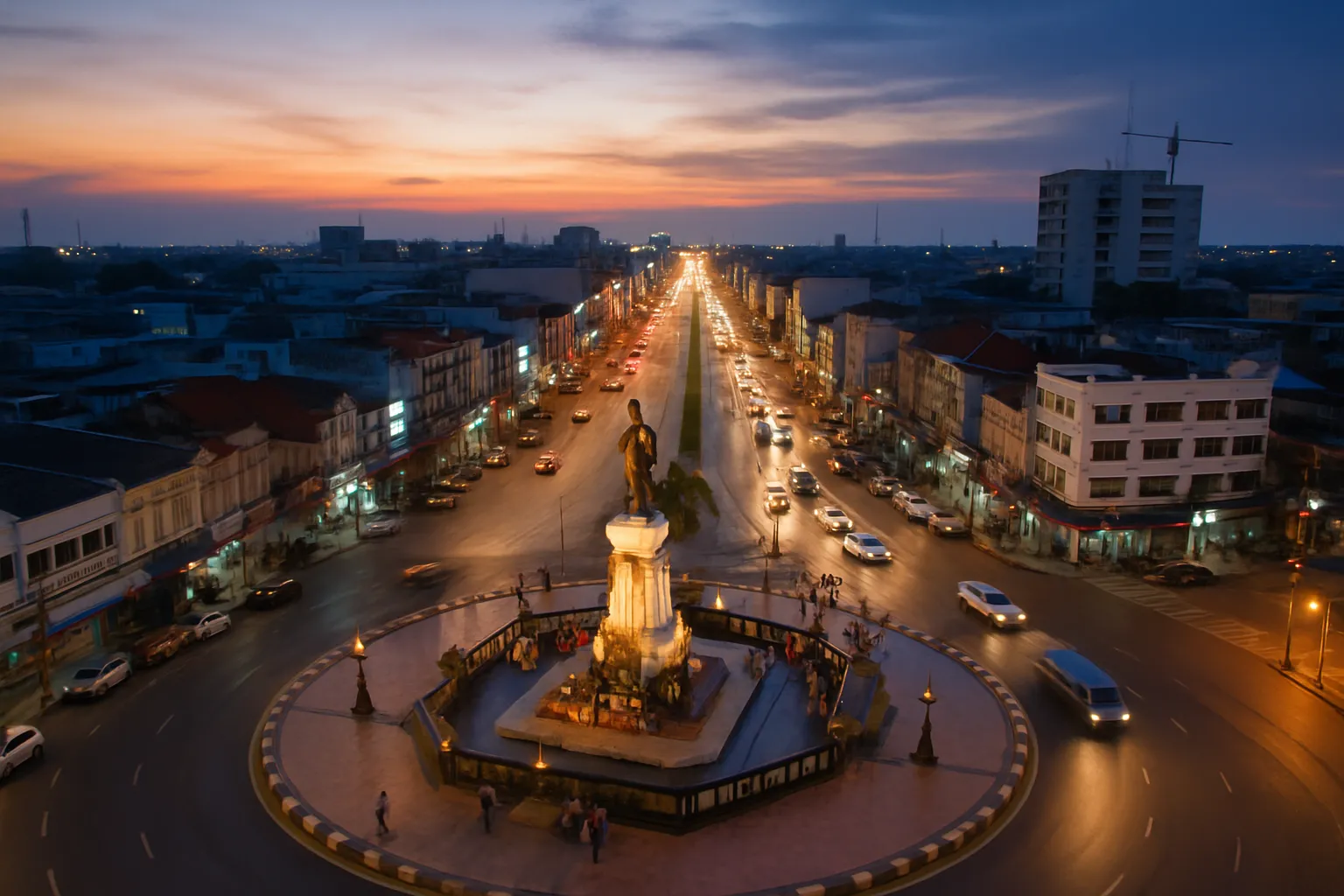
Korat is not a sleepy backwater. It's a city of nearly 200,000 people with a real pulse, a modern mall or two, excellent street food, and a transport network that connects you to every corner of Isaan. The city itself orbits around the Thao Suranari Monument, a shrine dedicated to a local heroine who repelled a Lao invasion in the 19th century. Every year in late March and early April, the city erupts into a week-long festival honoring her, one of the most genuinely local celebrations in Thailand.
Beyond the monument, the old city walls and moat are still partially intact, giving Korat an atmospheric, layered feel that newer Thai cities lack. The night market along the moat road is the perfect first evening activity: cheap, lively, and utterly unpretentious.
The Khmer Temple Trail: Isaan's Best-Kept Secret
Before Angkor was built in Cambodia, the Khmer empire covered much of what is now northeast Thailand. The architectural legacy left behind is staggering, and unlike Angkor Wat, you'll often have these temples almost entirely to yourself.
Phimai Historical Park
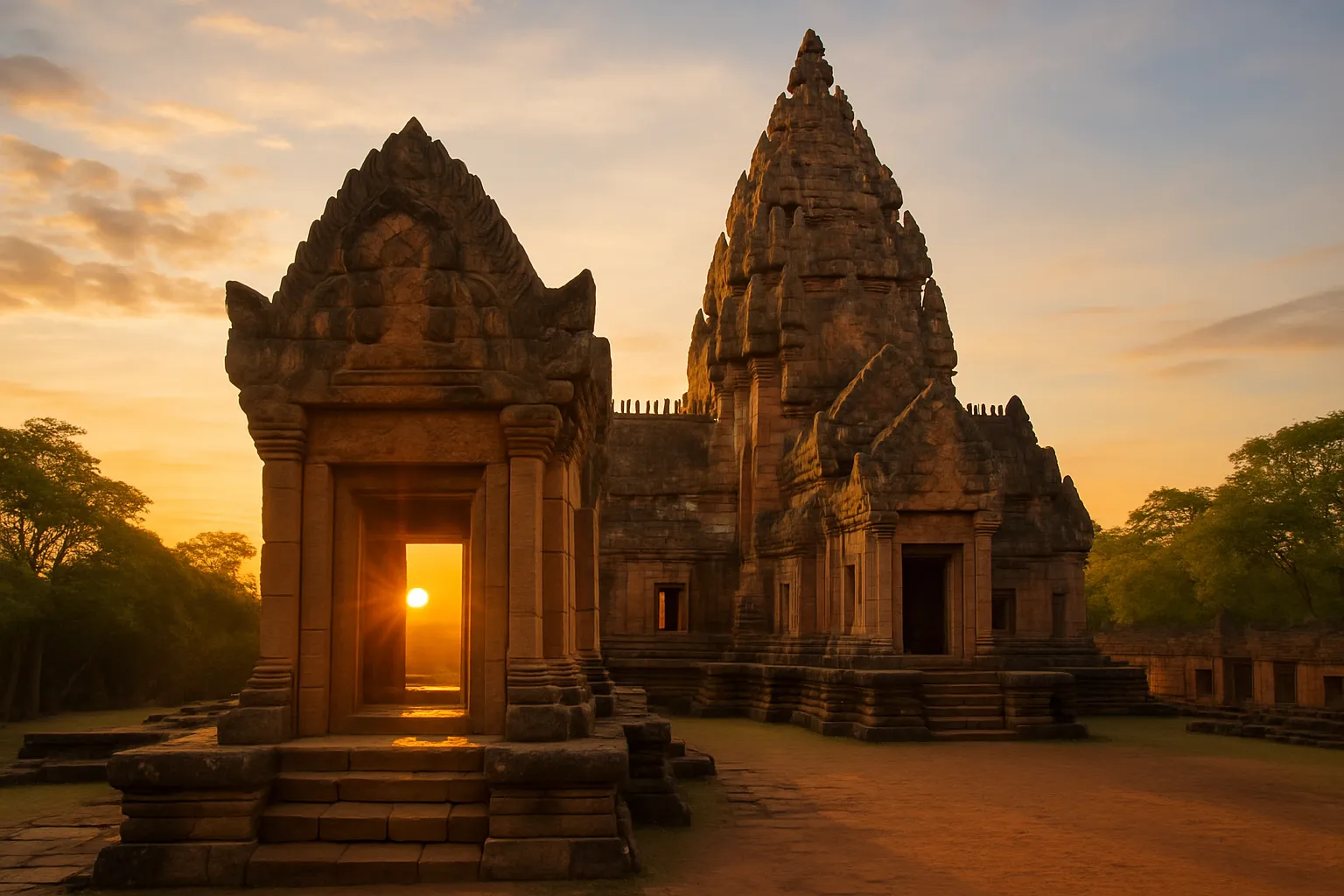
Phimai sits about 60 km north of Korat and contains one of the largest and best-preserved Khmer sanctuaries in Thailand. Dating back to the 11th and 12th centuries, the central white sandstone tower is genuinely breathtaking. Entry costs around 100 THB for foreigners, and a tuk-tuk from Korat can be arranged for roughly 600-800 THB return. Plan at least two to three hours on site.
Phanom Rung and Mueang Tam
Further south in Buriram province, the Phanom Rung Historical Park sits atop an extinct volcano at an elevation of 400 meters. The temple faces east, and on four specific days per year, the rising sun aligns perfectly through all 15 doorways. It's one of those natural-architectural alignments that you simply have to see in person. Combined with nearby Prasat Mueang Tam, this makes for a full-day excursion that rivals anything you'll see in Southeast Asia.
Standing at Phanom Rung at sunrise with no other tourists in sight is the kind of travel moment that makes you wonder why everyone else is queueing for the Grand Palace.
Silk Villages and Living Culture
Isaan is the heartland of Thai silk production, and the villages around Korat and further into the region offer something no museum can replicate: watching the entire process unfold in real time. From silkworm cultivation to dyeing with natural pigments to hand-weaving on traditional wooden looms, the craft here is centuries old.
The village of Pak Thong Chai, just 30 km south of Korat, is particularly famous for its silk. You can visit workshops, watch weavers at work, and buy directly from producers at a fraction of the Bangkok retail price. A good quality hand-woven silk scarf here might cost 300 to 600 THB, compared to 1,500 THB or more in a Bangkok shop.
- Visit a silk workshop in Pak Thong Chai to see hand-loom weaving
- Stop at the Phimai Historical Park (budget 100 THB entry + transport)
- Try som tam and gai yang at a local market, not a tourist restaurant
- Explore the Korat night market along the old moat
- Day trip to Phanom Rung for the sunrise doorway alignment
- Check out the Korat Zoo or Khao Yai National Park for nature lovers
Isaan Food: Eating Like a Local
Isaan cuisine is its own distinct culinary world. Don't expect the coconut-milk curries and sweet stir-fries of central Thailand. Here, everything is bolder, spicier, and often fermented. The region gave the world som tam (green papaya salad), and locals eat it daily in a dozen different variations.
A standard Isaan meal out on the street will cost you somewhere between 60 and 120 THB. For that, you'll get grilled chicken (gai yang), sticky rice in a woven bamboo basket, a fierce laab salad, and likely a cold Singha or Leo beer to balance the heat. This is everyday food here, not a tourist performance.
Getting to Isaan: Practical Transport from Bangkok
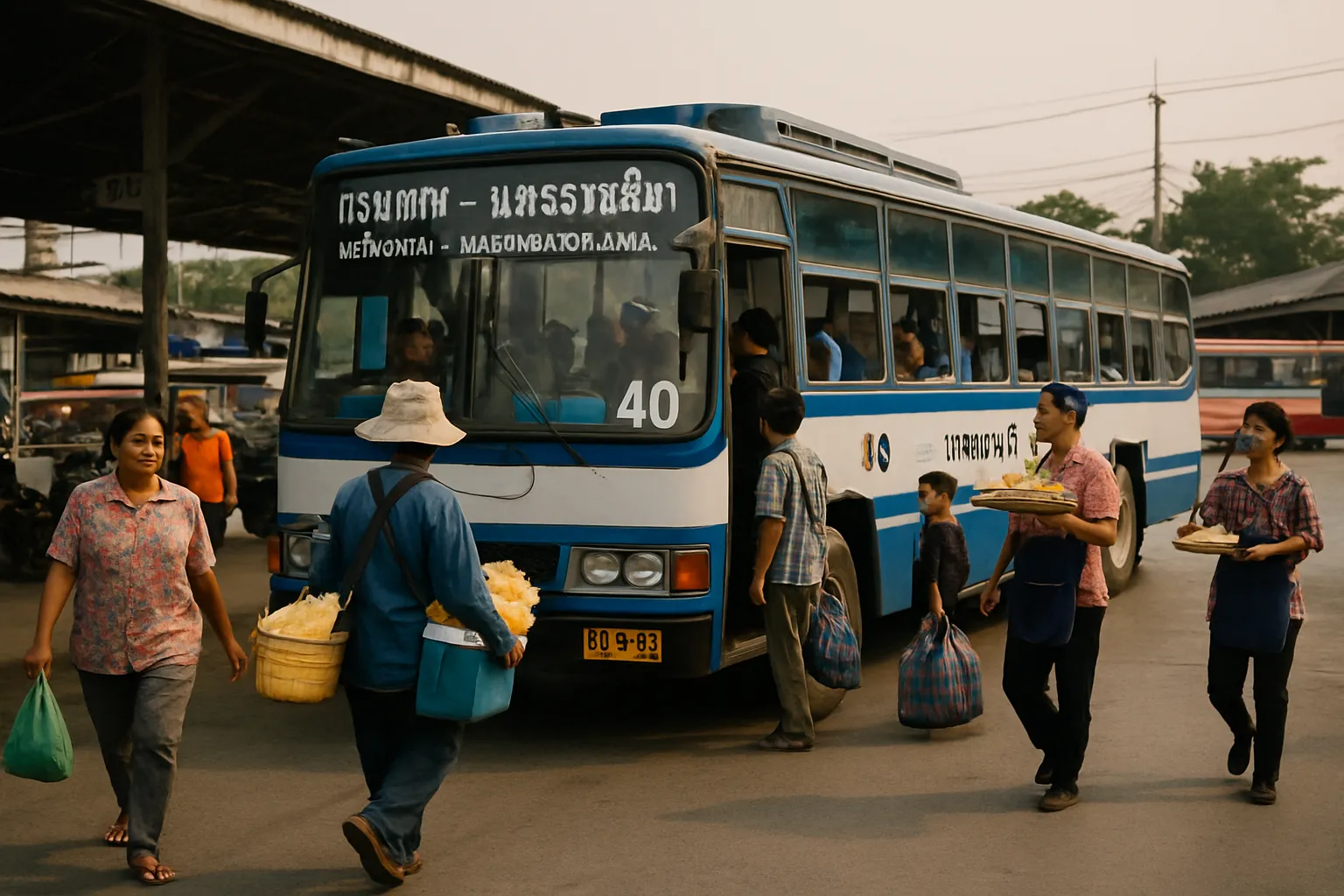
Getting to Korat is genuinely easy. The most popular options are bus and train, and both are comfortable and affordable.
Where to Sleep in Korat and Beyond
Korat has accommodation for every budget. Guesthouses near the old city run from 300 to 600 THB per night for a clean and simple room. Mid-range hotels in the city center offer air-conditioning, a pool, and breakfast for 800 to 1,500 THB. The city also has several international chains if you want full comfort.
Further into Isaan, homestays become increasingly common and genuinely rewarding. Staying with a local family in a silk-weaving village, for example, costs very little (often 400 to 700 THB per person including meals) and offers the kind of cultural immersion that no resort can package. The Tourism Authority of Thailand - Nakhon Ratchasima maintains a directory of registered homestay programs in the province.
Best Time to Visit Isaan
The northeast has three distinct seasons and the timing of your visit matters quite a bit. The cool dry season from November to February is hands-down the best time to travel. Temperatures sit between 20 and 30°C, the skies are clear, and the landscape is green after the rains.
The hot season from March to May pushes temperatures above 38-40°C regularly, which makes outdoor temple visits genuinely punishing. The wet season from June to October brings rain and lush scenery but can make some rural roads difficult. That said, the rice paddies during this period turn the plateau into a sea of vivid green, and the region empties out even further from an already thin tourist crowd.
Isaan and the Laos-Cambodia Border Region
One underrated aspect of an Isaan trip is its position as a crossroads. The region shares borders with both Laos and Cambodia, and border crossings are available for travelers who want to extend their journey. The Chong Chom crossing into Cambodia and the Chong Mek crossing into Laos are both accessible from Korat with a bit of planning.
This geography also explains the cultural depth of Isaan. The food, the language (many locals speak a Lao-influenced dialect), and the temple architecture all reflect centuries of interaction between these neighboring civilizations. It's the kind of place where every conversation and every crumbling doorway tells a story that goes far beyond Thailand's borders.
Practical Budget for an Isaan Trip
Isaan is consistently cheaper than Bangkok, Chiang Mai, or the islands. A comfortable independent traveler can get by on 800 to 1,200 THB per day including accommodation, food, local transport, and entry fees. A more generous budget of 1,500 to 2,500 THB per day opens up mid-range hotels, motorbike rentals, and guided excursions.
For a five-day Isaan itinerary based in Korat with day trips to Phimai, Pak Thong Chai, and Phanom Rung, budget roughly 5,000 to 8,000 THB excluding your Bangkok-to-Korat transport. That's a remarkably complete and culturally rich trip for the price of a single night in a Koh Samui resort.
Isaan won't give you Instagram-perfect beaches or rooftop cocktails at sunset. What it will give you is something rarer: the feeling that you've actually seen Thailand, not just the version that's been polished and packaged for export. For anyone serious about understanding this country, the northeast is not optional. It's essential.